
Choosing an ERP (Enterprise Resource Planning) system is one of the most strategic decisions in the life of a small or medium-sized business. It’s a bit like choosing a long-term travel companion: if you choose well, it supports you, helps you move forward, and makes the journey smoother. If you choose badly… well, every single day becomes a struggle. The right ERP doesn’t just improve daily operations – it becomes a real engine for growth and long-term competitiveness.
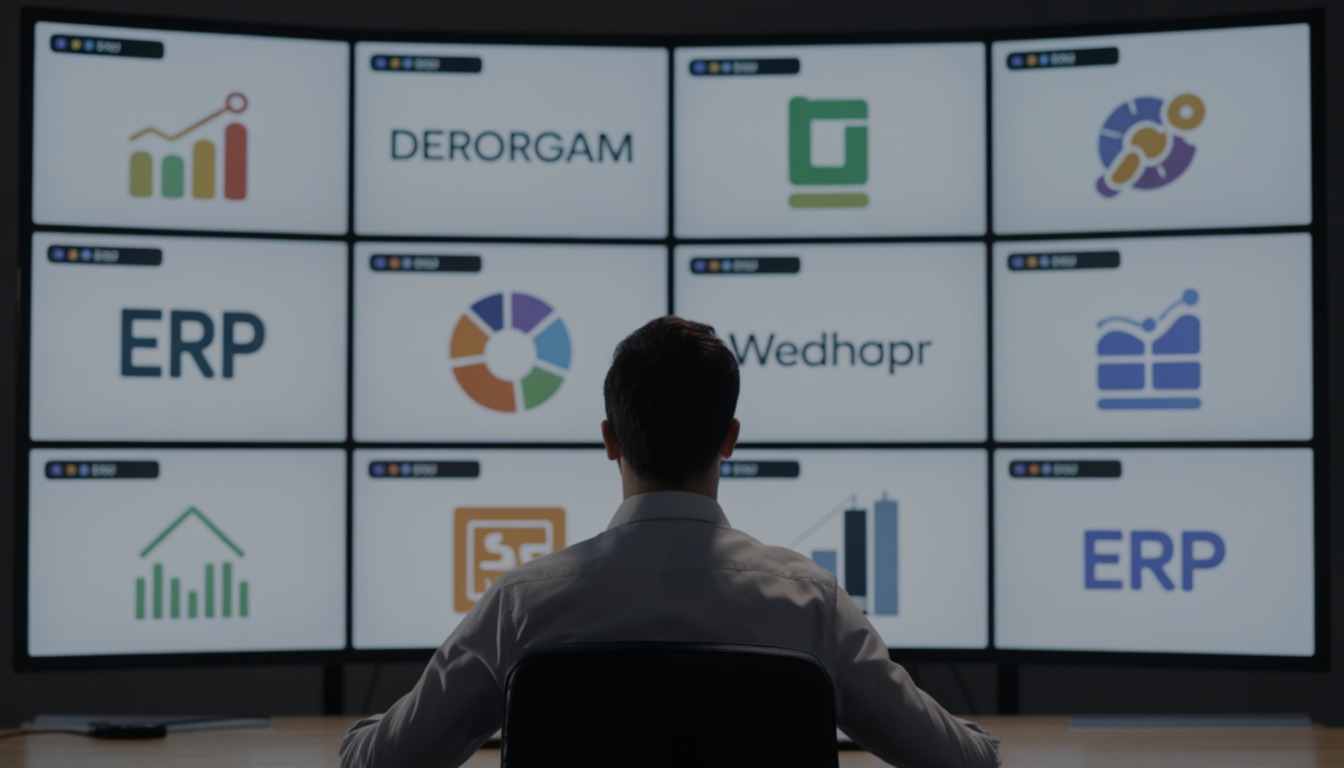
The challenge? The market is full of solutions, each claiming to be “the best” – like walking into a trendy coffee shop with 40 types of coffee on the menu, all promising the perfect experience. In this guide, we’ve collected the most important aspects to help you navigate the ERP jungle and find a system that truly fits your business.
1. Module Needs – Don’t Pay for What You Don’t Use
The first and most important question: what do you actually need? Finance, logistics, CRM, HR – or just a few core functions?
For most SMEs, a modular ERP is the smartest choice. Think of it like LEGO: you only build in the blocks you actually need. This way, you avoid paying for unused features and your system won’t turn into an overcomplicated digital monster that nobody enjoys using.
A short real-life story: One business owner once said: “Our ERP had more features than my Swiss Army knife – and we used about half of them. It was expensive, complex, and everyone hated it.” Lesson learned: relevance beats quantity.
2. Process Complexity – The System Should Adapt to You
You shouldn’t adapt to the ERP – the ERP should adapt to you.
Heavy, enterprise-grade systems designed for large corporations are often too complex and too expensive for SMEs – like using a truck to go to the corner shop. On the other hand, systems that are too simple won’t handle real business processes properly.
The ideal ERP is:
- not too complex,
- not too simple,
- but exactly as advanced as your business actually needs..
3. Industry-Specific Features – The Devil Is in the Details
A manufacturing company has very different needs than a trading or service company. Your ERP must be able to handle industry-specific processes – otherwise, you’ll end up doing more manual work than automation.
It’s worth checking:
- whether industry-specific modules are available,
- what references the system has
- how satisfied similar companies are with it.
Real references often say more than polished marketing materials.
4. Budget – Balance Between Value and Cost
An ERP system is not just a cost – it’s an investment.
Luckily, there are ERP solutions today that are specifically designed for SMEs. They are:
- affordable,
- scalable,
- and powerful enough without unnecessary complexity.
The goal is not to choose the cheapest option – but the one that delivers the best business value for your money..
5. Scalability – Plan Not Just for Today, But for Tomorrow
Your business will grow – hopefully. 🙂 And your ERP must be able to grow with it.
Make sure the system:
- is easy to expand,
- supports new modules,
- allows flexible user growth,
- never becomes a bottleneck for development.
A good ERP doesn’t slow growth – it enables it.
6. Technical Support – Don’t Be Left Alone When Things Go Wrong
ERP implementation is not a one-time event – it’s a journey. And there will be questions. Problems. “Why doesn’t this work?” moments.
That’s why it matters to have:
- fast response times,
- expert support,
- local-language service,
- real people instead of automated ticket replies.
Good support doesn’t just reduce stress – it saves time and money.
7. Legal Compliance – Don’t Let the Tax Authority Be Your ERP Tester
Your ERP must comply with local regulations, especially in:
- invoicing,
- accounting,
- taxation,
- online data reporting to authorities.
A non-compliant system can cause serious administrative chaos – and costly penalties. And let’s be honest: nobody wants “surprise gifts” from the tax authority.
Conclusion
Choosing an ERP system is not a technical detail – it’s a strategic business decision.A well-chosen ERP:
- creates transparency,
- improves efficiency,
- supports growth,
- and delivers real competitive advantage.
Take the time to assess your needs, compare solutions, and don’t decide based on price alone.
Supporting IKON ERP® is a modular, customizable enterprise management system that also guarantees legal compliance. Fill out our questionnaire, and discover how well our solution fits your company’s needs.


